
















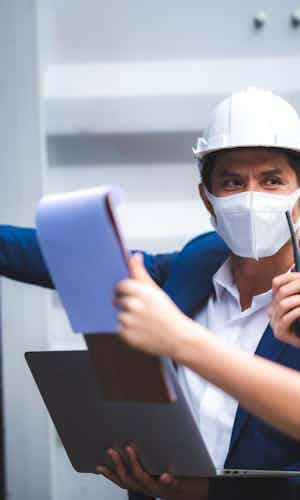
Every workplace has hazards, but not every workplace identifies them before an incident occurs. From manual handling injuries and slips, trips and falls to psychological health risks and equipment failures, hazards can develop gradually or appear without warning.
Under Australia's workplace health and safety framework, businesses have a responsibility to identify hazards and eliminate or minimise risks so far as is reasonably practicable. Safe Work Australia recommends a systematic risk management process that begins with hazard identification and consultation with workers.
The good news is that hazard identification doesn't need to be complicated. By using a combination of observation, consultation and structured processes, employers can uncover risks before they result in injury, illness or disruption.
1. Conduct regular workplace inspections
One of the simplest and most effective ways to identify hazards is through routine workplace inspections.
Walking through the workplace with a trained eye can reveal issues that may otherwise go unnoticed, such as:
- Damaged flooring creating slip or trip hazards
- Poor housekeeping and obstructed walkways
- Faulty machinery or equipment
- Unsafe storage of chemicals or materials
- Inadequate lighting or ventilation
Inspections should be planned and documented rather than relying on informal observations. Using checklists tailored to your industry can help ensure consistency and prevent common hazards from being overlooked.
It is also important to inspect all work areas, including storerooms, loading zones, remote work locations and areas used infrequently. Hazards often emerge in places that receive less day-to-day attention.
2. Consult with workers
Workers are often the first to recognise emerging hazards because they interact with tasks, equipment and processes every day.
Safe Work Australia identifies worker consultation as a key part of managing workplace health and safety risks, recognising that employees have knowledge, experience and ideas that can help identify hazards and improve safety outcomes.
Businesses can gather valuable information by:
- Holding regular safety meetings
- Encouraging hazard reporting
- Conducting toolbox talks
- Seeking feedback before introducing changes
- Consulting health and safety representatives (HSRs), where applicable
Creating an environment where workers feel comfortable speaking up is critical. If hazards are not reported because employees fear criticism or believe nothing will change, important warning signs can be missed.
3. Review incident, injury and near-miss reports
Past events can provide valuable insight into future risks.
Many businesses focus on incidents that result in injury, but near misses can be just as important. A near miss occurs when an event could have caused harm but did not due to chance or timing.
Reviewing incident records can reveal patterns and recurring issues. If multiple reports involve the same hazard, the workplace may require stronger controls or changes to work processes.
When analysing incidents, employers should look beyond immediate causes and consider underlying factors, such as inadequate training, poor supervision, equipment maintenance issues or unrealistic workloads.
This approach helps businesses move from reacting to incidents to preventing them.
Need help with workplace health and safety?
Get specialist support to identify risks and build a safer workplace.
4. Assess changes in the workplace
Many hazards emerge when something changes.
Introducing new equipment, modifying workflows, restructuring teams or starting a new project can all create risks that were not present previously.
Change-related hazards may involve:
- New machinery requiring additional training
- Different manual handling requirements
- Increased traffic movement
- Changes to staffing levels
- Altered work environments
- New psychosocial hazards arising from organisational change
A common mistake is assuming that existing controls will remain effective after a change has occurred. In reality, even minor operational changes can alter risk levels significantly.
Before implementing changes, businesses should assess potential hazards and consult affected workers. Reviewing risks during planning rather than after implementation can help prevent costly mistakes and safety incidents.
5. Use formal risk assessments and hazard reporting systems
A structured approach to hazard identification is essential for maintaining long-term safety performance.
Formal risk assessments encourage businesses to systematically examine work activities, equipment, materials and environments to identify potential sources of harm. Safe Work Australia's risk management process starts with identifying hazards, followed by assessing risks where necessary, implementing controls and reviewing their effectiveness.
Useful tools may include:
- Hazard reporting forms
- Digital safety management platforms
- Risk registers
- Task observations
- Job safety analyses (JSAs)
- Safe work method statements (SWMS), where required
These systems help organisations capture and track hazards consistently rather than relying on individual memory or informal conversations.
Importantly, hazard identification should not be treated as a one-off exercise. Workplace health and safety regulators emphasise that managing hazards and risks is an ongoing process that requires regular review and continuous improvement.
Hazard Identification with Peninsula
Hazards exist in every workplace, regardless of industry or business size. The organisations that achieve strong safety outcomes are those that actively look for hazards before an incident occurs.
Regular inspections, worker consultation, incident reviews, change management processes and formal risk assessment systems all play an important role in identifying potential risks early.
By taking a proactive approach, employers can better protect workers, strengthen compliance with your legal obligations and create a safer, more productive workplace.
If you're unsure whether your hazard identification processes are effective, Peninsula's Health & Safety team can help review your existing systems, identify gaps and provide practical guidance to support your workplace safety objectives.