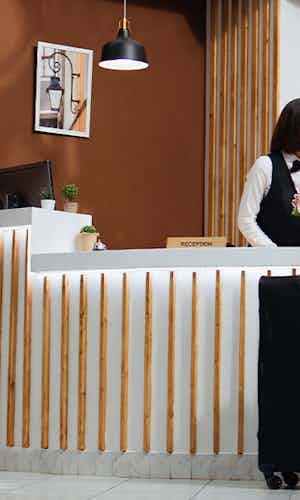
Woman checking into hotel

Hospitality Industry Award [MA000009]: Essential Insights for Employers in Australia

Modern Awards

18 Sept 2025 (Last updated 3 Dec 2025)

Share on:

The Australian hospitality industry employs thousands of people across the country. There are multiple regulations and laws governing this industry sector and it can be challenging for small businesses to keep up with the changes. To help simplify the complex award rates, we have created this essential guide for hospitality business owners.

Hospitality Award

The Hospitality Industry (General) Award 2020 [MA000009], is set by the Fair Work Commission, and delivers essential standards for employee compensation. This guide highlights the 2025 updates on entitlements and pay rates. If you need further help or support, contact Peninsula today.

Originally introduced by the Australian Industrial Relations Commission, the modern Hospitality Award serves as a cornerstone for fair employee compensation in various hospitality roles.

Coverage

The hospitality industry covers employers and their employees who fit within the classifications of the award.

The hospitality industry means:

  • Tourist or residential accommodation including resorts, motels, hotels, serviced apartments, and caravan parks
  • Holiday apartment complexes
  • Wine bars, saloons, and taverns
  • Casinos
  • Caterers
  • Nightclubs, function centres, convention facilities and restaurants connected with an employer covered by the Hospitality Award (e.g. hotel restaurant)

Examples of employees covered by the Hospitality Award include:

  • Waiter and waitress
  • Chefs, apprentice chefs, cooks, kitchen hands
  • Catering employees working for a catering business
  • Housekeepers, doorpersons and concierge staff
  • Front office, clerical, and reception staff
  • Managerial staff who are not senior management
  • Leisure attendants
  • Security officers and storepersons
  • Casino staff, including gaming staff, equipment technicians, security and finance officers
  • Gaming attendants
  • Pub owners
  • Maintenance and gardening staff.

The Hospitality Award also covers labour hire businesses and their employees who are placed within an organisation in the hospitality industry. It is important you don’t get confused between the Hospitality Award, the Fast Food Industry Award, and the Restaurant Industry Award. If you feel your business falls under either of these awards read our guides for more information.

2025 Hospitality Award Rates – What employers need to know

The latest update present a structure of pay rates that consider factors like age, job role, and working hours. It's essential for employers to grasp these details to ensure compliance and uphold equitable workplace practices. These updates reflect the adjustments in the cost of living and the hospitality industry’s desperate demand for skilled labour.

Minimum wage 2025

Each year, the Fair Work Commission reviews both the National Minimum Wage and the minimum pay rates under awards (annual wage review). Most changes begin on the first full pay period on or after 1 July.

The National Minimum Wage applies to employees not covered by an award or registered agreement. This is the minimum pay rate provided by the Fair Work Act 2009 and is reviewed each year.

On 1 July 2025, the National Minimum Wage increased to $24.95 per hour or $948 per week.

Some awards contain introductory pay rates for new employees in their industry. These rates generally apply for a limited time until an employee progresses to their next level. These introductory rates may be less than the National Minimum Wage.

Detailed rate analysis by age and role: Enhancing understanding for employers

In the hospitality sector, the complexities of award rates can be daunting. It's crucial for employers to understand not just the basic hourly rates, but also how these rates vary depending on the shift, position, and penalty rates. Here’s an extended breakdown:

Introductory and Youth Rates:

Role Pay Rate
Under 17 in non-office roles The base hourly rate starts at $12.14, with increments for late hours and weekends.
Under 16 in office roles This rate begins at $10.93 and adjusts similarly for unsocial hours.

Level-Based Rate Structure:

Level Pay Rate
Level 1 (e.g., Food and Beverage Attendant Grade 1) The base rate for under 17 years is $12.48, increasing for evening shifts and weekends.
Level 2 (e.g., Cook Grade 1) Starting at $12.93 for under 17 years, with additional pay for night shifts and weekend work.
Level 3 (e.g., Guest Service Grade 3) For under 17 years, the hourly rate is $13.35, with higher rates for unsocial hours.
Level 4 and 5 Roles These higher levels, including supervisory positions, see a commensurate increase in base pay. For example, a Level 5 Food and Beverage Supervisor under 17 years starts at $14.94 per hour.

Rates for 18 to 20-Year-Olds:

Level Pay Rate
Level 1 Roles for 18-Year-Olds The base rate is around $17.47 per hour, increasing for weekend shifts.
Level 2 and Above For example, a Cook Grade 1 at 18 years starts at approximately $18.10 per hour, with higher rates for late hours and weekends. Rates progressively increase with each year of age.

Shift Variations and Penalty Rates:

Shift Type Pay Rate
Weekday Evenings (7pm to Midnight) There’s an additional $2.81 per hour on top of the base rate.
Night Shift (Midnight to 7am) This shift attracts an extra $4.22 per hour on top of the base rate.
Saturday Work Rates are enhanced to 125% of the base rate.
Sunday Shifts These attract the highest premiums; the same Level 1 employee would earn 150% of their base rate.

Adult Rates (21 Years and Above):

  • Adult workers generally receive higher base rates, reflecting their experience. For example, a Level 1 adult worker might start at a base rate higher than younger counterparts.
  • Evening, night shifts, and weekend work attract additional pay. An adult in a Level 1 role working a Sunday shift could earn significantly more than the base rate.

Understanding these detailed aspects of the Hospitality Award rates is not just about compliance but also about recognising and valuing the diverse roles and contributions of employees in the hospitality sector. Employers need to be adept at navigating these complexities to ensure a fair and motivating work environment.

Analysis for casual employees by age and role in the hospitality industry

In the hospitality sector, casual employees have distinct award rates that reflect the flexible nature of their employment. Here's a breakdown focusing on casual employees, including variations based on age and role:

Casual Loading:

  • Casual employees receive a higher base hourly rate due to 'casual loading,' which compensates for the lack of benefits like paid leave and job security. This loading is typically an additional percentage on top of the base rate.

Rates for Younger Casual Employees (Under 18 Years):

  • Introductory and Level 1 Roles: For example, a casual food and beverage attendant under 17 might start at a base rate of $12.14 per hour, plus a casual loading (often 25%), making it approximately $15.18 per hour.
  • Evening and Weekend Penalties: These rates increase during evening and weekend shifts. For instance, the same employee might earn more on a Sunday due to additional penalty rates.

Rates for 18 to 21-Year-Old Casuals:

  • Level 1 to Level 5 Roles: As age and experience increase, so do the base rates. An 18-year-old casual employee in a Level 1 role could start at around $16.26 per hour plus casual loading, with higher rates for late hours and weekends.
  • Shift Penalties: The pay rates for evening, night, and weekend work are higher, with the penatly applied on the ordinary hourly rate.

Adult Casual Rates (21 Years and Above):

  • Adult casual workers generally receive the highest base rates. A Level 1 adult casual employee's base rate will be higher than that of younger employees, plus the casual loading.
  • Penalty Rates for Adults: Adult casual workers also benefit from increased pay for unsocial hours, with the highest premiums typically paid for Sunday shifts.

Variations Across Roles:

  • Different roles within the hospitality industry have distinct base rates for casual employees. For example, skilled roles like chefs may have higher base rates compared to entry-level positions.

Compliance for Employers:

  • It's imperative for employers to adhere to the correct award rates to remain compliant with Australian labour laws and to value the contribution of casual employees fairly.

Understanding casual employee rates in various roles and age groups is vital for employers in the hospitality sector to ensure fair compensation for all employees.

Get help for your hospitality business today

If you’re concerned or confused about pay rates or penalties in your hospitality business, then it’s time to reach out to the experts. Peninsula has worked with hundreds of hospitality businesses and employers in Australia and helped them understand pay rates, penalties, and employment contracts.

Our team of dedicated members is always available to answer your questions, offer you resources and training, and support you every step of the way.

From hiring to firing, we have resources for every stage of the employee lifecycle. Contact Peninsula today to get your questions answered.


Have a question?

Have a question that hasn't been answered? Fill in the form below and one of our experts will contact you back.

By clicking submit you consent to our Privacy Policy

Related Guides

Modern Awards

Understanding the SCHADS Award

The Social, Community, Home Care and Disability Services Industry Award (SCHADS) [MA000100] sets out standards, entitlements, and pay rates for a wide range of roles in the social and community sector. Understanding if your business is covered under the SCHADS Award is important as it ensures you are paying your employees accurately, complying with Fair Work legislation, and maintaining a safe and fair workplace for everyone. In this guide, we breakdown the SCHADS Award, focusing on the 2025 updates, pay rates across various levels, and specific considerations for different states including Victoria (Vic), Queensland (QLD), and New South Wales (NSW). What is the SCHADS Award? The SCHADS Award is a crucial framework in the social and community services sector. It covers a range of professionals, including disability support workers, ensuring fair compensation and work conditions. The award is periodically reviewed to reflect industry changes and economic conditions. SHADS Award Coverage The SCHADS Award covers employers and employees who fit within the classifications of the award and are in the following sectors: Crisis assistance and supported housing Social and community services Home care Family day care scheme. The social and community sector means the provision of social and community services including: Social work Recreation work Welfare work Youth work or community development work. This sector also includes: Organisations who primarily engage in policy, advocacy, or representation on behalf of organisations carrying out such work The provision of disability services including the provision of personal care and domestic and lifestyle support to a person with a disability in a: community residential setting respite centre and day services. The home care sector means the provision of personal care, domestic assistance or home maintenance to an aged person or a person with a disability in a private residence. The crisis assistance and supported housing sector applies to organisations providing vital support during times of crisis. This includes: Emergency accommodation Supported housing. The SCHADS Award has separate streams (rules) for each of these industries, so it’s essential to determine which stream applies to your business and employees. 2025 SCHADS Award Update – What You Need to Know The 2025 update of the SCHADS Award introduces significant changes, particularly in terms of pay rates and conditions for overtime. These changes are crucial for maintaining industry standards and ensuring fair compensation for workers. The SCHADS wage increases are in two stages Stage 1 Stage 2 If the percentage increase for a specific classification level exceeds 3%, half of the total increase was implemented on 1 January 2025 The remaining percentage takes effect on 1 October 2025 If the percentage increase for a specific classification level exceeds 3%, but half of the total increase amounts to less than 3%, a 3% increase was applied on 1 January 2025 The remaining percentage will be implemented on 1 October 2025 If the percentage increase for a specific classification level is less than 3%, the full increase was applied on 1 January 2025 No additional increase will occur on 1 October 2025 SCHADS Award Pay Rates by Level The SCHADS Award categorises employees into different levels based on their roles, responsibilities, and qualifications. Here's a breakdown of the pay rates for each level: Level 2 to 8 Pay Rates: Level 2: Generally, for workers with some experience in the sector but not in a supervisory role. Level 3 to 5: These levels include more experienced workers, with Level 5 often involving supervisory responsibilities. Level 6, 7 and 8: These are typically for senior roles that require significant experience and qualifications, with corresponding higher pay rates. SCHADS Overtime Pay Rates The SCHADS Award outlines specific provisions for overtime work, ensuring that employees are fairly compensated for hours worked beyond their normal rostered hours. SCHADS Award Salary Details Salaries under the SCHADS Award vary based on the level, experience, and qualifications of the employee, as well as the specific nature of their role. Disability Support Workers under SCHADS Disability support workers are covered under the SCHADS Award, with their pay rates determined by the level of their role and responsibilities. SCHADS Award in Different States Victoria, QLD, and NSW: While the SCHADS Award provides a national framework, there can be state-specific nuances. Employers and employees in Victoria, Queensland, and New South Wales need to be aware of any state-specific conditions or allowances that may apply. Minimum Wage 2025 Each year, the Fair Work Commission reviews both the National Minimum Wage and the minimum pay rates under awards (Annual wage review). Most changes begin on the first full pay period on or after 1 July. The National Minimum Wage applies to employees not covered by an award or registered agreement. This is the minimum pay rate provided by the Fair Work Act 2009. As of 1 July 2025, the National Minimum Wage is $24.95 per hour or $948.00 per week. Some awards contain introductory pay rates for new employees in their industry. Major Updates in the SCHADS Award Clauses 1. Pay Rate Adjustments: One of the most significant updates in the SCHADS Award is the adjustment of pay rates across various levels. This includes increased base rates for levels 2 through 7, reflecting the growing recognition of the skills and responsibilities in these roles. 2. Overtime and Penalty Rates: Changes to overtime and penalty rates have been implemented, ensuring fair compensation for employees working beyond their standard hours. This includes clearer definitions of overtime work and the corresponding rates applicable. 3. Leave Entitlements: The latest update includes revisions to leave entitlements, encompassing annual leave, personal/carer’s leave, and parental leave. These changes aim to provide greater support and flexibility to employees. 4. Work Arrangements: Updates to work arrangement clauses have been made, offering more clarity on part-time and casual work definitions. This also includes provisions for flexible work arrangements, reflecting the changing nature of work in the sector. 5. Disability Support Worker Provisions: Specific updates related to disability support workers have been made, acknowledging the unique challenges and requirements of these roles. This includes adjustments to pay rates and work conditions tailored to this group. 6. State-Specific Adjustments: The SCHADS Award includes state-specific changes, particularly for Victoria, Queensland, and New South Wales. These adjustments consider the regional variations in the industry, ensuring the award remains relevant and applicable across different states. Implications of the SCHADS changes The updates to the SCHADS Award clauses are not just administrative adjustments; they have real-world implications for the daily operations of organizations within the social, community, home care, and disability services sectors. Employers need to carefully review these changes to ensure that their business practices are aligned with the latest standards, while employees should be aware of their rights and entitlements under the updated award. Understanding and implementing the SCHADS Award is key to supporting a fair and equitable work environment in the social and community services sector. As the industry continues to grow and evolve, staying informed and compliant with these rates and conditions is crucial for the success and sustainability of organizations within this sector. Get expert advice for your SCHADS business Peninsula has worked with several businesses in Australia who operate in the SCHADS sector. We have created factsheets, resources, tools, guides, and software for SCHADS businesses in Australia. We understand the challenges affecting your business and know small businesses need support and guidance for complicated awards and pay rates. Whether you’re in Victoria, QLD, NSW, or any other part of Australia, our team of experts can provide you with the advice and solutions you need to ensure compliance and best practices in your workplace. Contact us to get all your questions answered.

Modern Awards

Navigating the Miscellaneous Award [MA000104]: An Essential Guide for Employers and Employees

In this guide we discuss some of the key provisions of the Miscellaneous Award including what sorts of businesses it covers, the different levels of employee classifications, pay rates, and employee entitlements. If you’re a business owner in Australia, it's imperative you understand the basics and note the changes to the Award in 2025 and their implications for various roles. Peninsula has helped thousands of businesses in this sector, and we offer tailored solutions to meet your needs. If you require any support or assistance, feel free to contact Peninsula today. Scope and significance of the miscellaneous award: The Miscellaneous Award 2020, updated in 2025, plays a pivotal role in setting employment standards across a range of occupations not covered by other industry-specific or occupational awards. This award is a key instrument in safeguarding fair work practices for a diverse workforce. Coverage The Miscellaneous Award covers employers and employees who fit within the award's classifications. The Miscellaneous Award also covers labour hire businesses and their employees who fit within the classifications of the award, if the employer is not covered by another award with a more appropriate classification. The award does not cover managerial employees and professional employees such as accountants and finance, marketing, legal, human resources, public relations and information technology specialists. Understanding coverage of the award may be tricky, that’s why we offer factsheets and summaries outlining coverage and pay rates. These factsheets and resources are customised for your business and your employees. If you need any help in understanding whether a role falls under the Miscellaneous Award, please contact us today. Minimum Wage 2025 Each year, the Fair Work Commission reviews both the National Minimum Wage and the minimum pay rates under awards (annual wage review). Most changes begin on the first full pay period on or after 1 July. The National Minimum Wage applies to employees not covered by an award or registered agreement. This is the minimum pay rate provided by the Fair Work Act 2009 and is reviewed each year. As of 1 July 2025, the National Minimum Wage is $24.95 per hour or $948 per week. Some awards contain introductory pay rates for new employees in their industry. These rates generally apply for a limited time until an employee progresses to their next level. These introductory rates may be less than the National Minimum Wage. Extended analysis of pay rates in the miscellaneous award The Miscellaneous Award offers a detailed structure for pay rates, which varies based on factors like age and employment type (full-time, part-time, and casual). This extended analysis provides a clearer understanding of how these rates apply to junior workers, adults, and different employment statuses. The minimum rates of pay are set out in Clause 15 of the Award. 1. Pay Rates for Junior Workers (Aged Under 16 to 20): Age Pay Rate Under-16-Year-Olds: Usually recieve the lowest pay rate, reflecting entry-level skills and higher supervision needs. 16-Year-Olds: Typically receive a percentage of the adult pay rate, reflecting their initial entry into the workforce. 17-Year-Olds: A slight increase from the 16-year-old rate, acknowledging a year's worth of experience and development. 18-Year-Olds: The pay rate for 18-year-olds is often set higher than for 16 and 17-year-olds, balancing their growing experience with their junior status. 19-Year-Olds: As they approach adulthood, 19-year-olds typically see a significant increase in their pay rate, closer to the full adult wage. 20-Year-Olds: At 20, the pay rate usually reaches near the full adult pay rate, in anticipation of reaching adulthood. 2. Adult Pay Rates: Adult Employment Type Pay Rate Full-Time/Part-Time Adults: Adult workers (usually those 21 and over) are entitled to the full adult pay rate as specified in the award. This rate reflects the standard compensation for the role without age-based scaling. Casual Adults Casual adult workers receive the adult base rate plus casual loading (typically around 25%) to compensate for the lack of benefits like paid leave. 3. Employment Type Variations: Employment Type Pay Rate Full-Time Workers Receive a consistent hourly rate alongside benefits such as annual leave and sick leave. Full-time rates are generally standard as per the role's classification in the award. Part-Time Workers Part-time workers earn the same hourly rate as full-time employees but on a pro-rata basis, depending on their hours worked. Casual Workers Casual workers across all age groups are eligible for casual loading on top of the base hourly rate. This higher rate compensates for the absence of certain full-time benefits and job security. Staying updated with the miscellaneous award: Understanding these pay rates is essential for ensuring compliance with the Miscellaneous Award. Employers must be diligent in applying these rates correctly, while employees, especially those who are younger, should be aware of their entitlements under the award. How Peninsula can help your business The legislation around awards and pay rates is complex and keeps on changing. As a business owner, you have a lot on your plate, and this is just another additional responsibility. You can rely on us instead. We have a team of experienced members who understand the nuances and technicalities of awards and pay rates for your industry. Our team will guide you through each step of the way. We have resources, factsheets, templates, policies, and software available for clients and customers. Contact Peninsula today for personalised support on the Miscellaneous Award [MA000104].

Modern Awards

The Complete Guide to Pharmacy Award [MA000012]

The Pharmacy Award [MA000012] is a complex award with regulations that govern the significant pharmacy industry in Australia. We know how time poor small businesses can be with the many responsibilities and obligations they need to juggle. That’s why we have put together this comprehensive guide outlining essential updates to the Pharmacy Award. This guide is dedicated to helping you understand the Pharmacy Award, focusing on the rates for 2025. It covers various aspects, including the general Pharmacy Award rate, specific pay rates for pharmacy assistants across different levels, and the overall framework set by the Pharmacy Guild. If you're a small business owner and need help in understanding which award your business falls under, call our free initial advice line for employers today. Pharmacy Award The Pharmacy Award provides a structured framework for wages and conditions within the pharmacy sector. It sets out the standards for fair compensation, working hours, and other employment conditions, playing a vital role in ensuring a balanced and equitable workplace. Coverage The Pharmacy Award covers business owners and employers in the community pharmacy industry and their employees who fit within its classifications. A community pharmacy means any business that: Is registered under the relevant state or territory legislation for a regulation as a pharmacy or is located in a state or territory where there is no legislation that regulates pharmacies. Compounds or dispenses prescriptions or sells medicines or drugs (which may be alongside other retail goods). Examples of employees covered by the Pharmacy Award include: Pharmacists Pharmacy students and interns Pharmacy assistants including dispensary assistants Shop assistants working in a community pharmacy. The Pharmacy Award also covers labour hire businesses and their employers who are placed within an organisation in the community pharmacy industry. The Pharmacy Award doesn’t cover: Nurses Beauticians Pharmacy employees of the pharmacies listed below that don’t sell goods and services to the public The following employers are not covered by the Pharmacy Award: Pharmacies owned by a hospital or public institution Pharmacies operated by the government that don’t sell their goods and services to the public Minimum Wage 2025 Each year, the Fair Work Commission reviews both the National Minimum Wage and the minimum pay rates under awards (annual wage review). Most changes begin from the first full pay period on or after 1 July. The National Minimum Wage applies to employees not covered by an award or registered agreement. This is the minimum pay rate provided by the Fair Work Act 2009 and is reviewed each year. As of 1 July 2025, the National Minimum Wage is $24.95 per hour or $948 per week. Some awards contain introductory pay rates for new employees in their industry. These rates generally apply for a limited time until an employee progresses to their next level. These introductory rates may be less than the National Minimum Wage. 2025 updates to the pharmacy award rates The Pharmacy Award underwent updates to reflect changes in the economic environment and sector-specific needs. These updates are essential for keeping the award relevant and fair. Key components of the pharmacy award rate: 1. Pharmacy Award Rate Overview: The Pharmacy Award rate outlines the minimum wage and conditions for employees working in the pharmacy sector, including pharmacists, pharmacy assistants, and other related roles. 2. Pharmacy Assistant Award Rates: The award specifies different pay rates for pharmacy assistants based on their level of experience, qualifications and responsibility. Level 1: Entry-level assistants, typically new to the industry. Level 2: More experienced assistants who have developed a broader skill set. Level 3: Senior assistants who manage more complex tasks and may have supervisory responsibilities. 3. Pharmacy Guild Pay Rates: The Pharmacy Guild often provides additional guidance on pay rates and industry standards, supplementing the official award rates. Understanding and adhering to the Pharmacy Award is crucial for maintaining a fair and compliant workplace. Employers must ensure they are up to date with the latest award rates and conditions, while employees should be aware of their rights and entitlements. Looking for assistance with pharmacy award rates? For those seeking guidance on the Pharmacy Award rates or needing assistance on navigating the complexities of the award, our team of experts is here to help. If you're a pharmacy business owner, we can provide you with tailored advice and solutions. Contact Peninsula today for expert assistance to ensure your business is aligned with the 2025 standards.

Do you have any questions regarding Modern Awards?